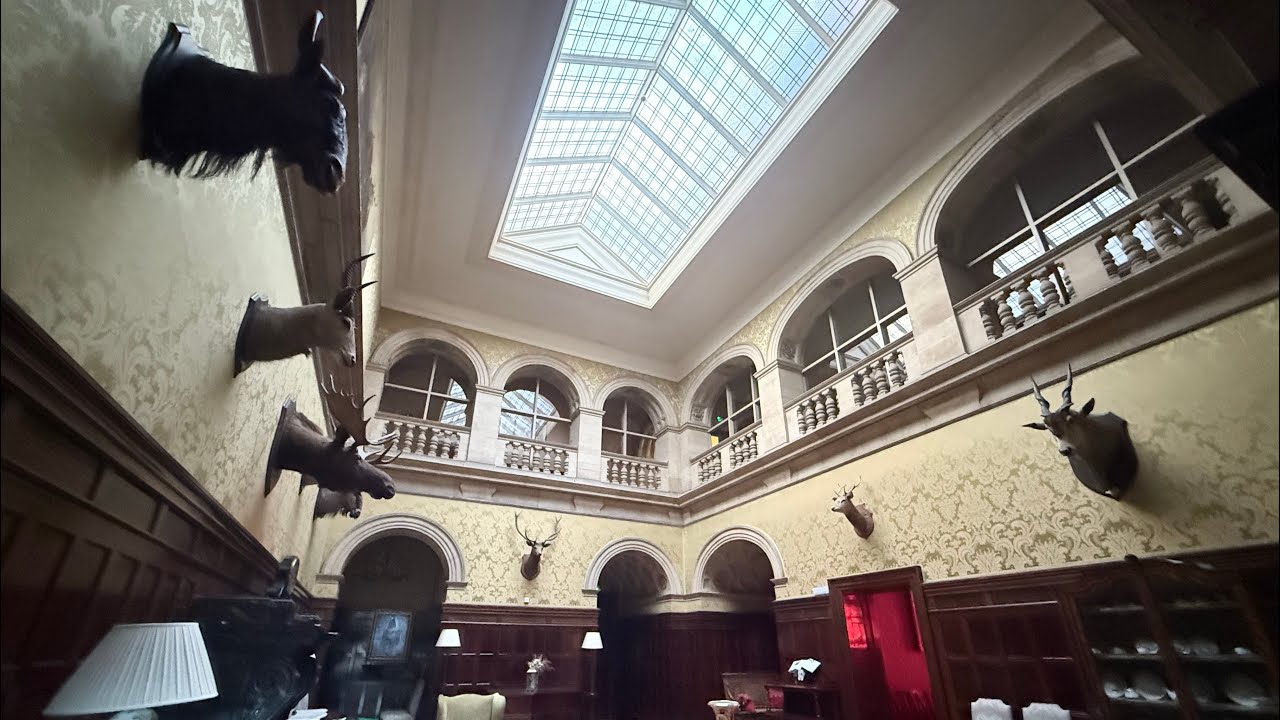

We step through the grounds of a once-prestigious country estate — a place where silence now hangs heavier than luxury ever did. Long driveways curve through overgrown parkland, hinting at a past shaped by wealth, power, and privilege. Every footstep feels measured, as if the building itself is watching… remembering.
Inside, time has stalled. Grand rooms that once hosted lavish gatherings now sit frozen, their elegance fading but not forgotten. Peeling paint, dust-covered furniture, and abandoned corridors tell a quieter story than any guestbook ever could. The contrast is striking — opulence versus decay, refinement versus neglect.
Natural light spills through tall windows, illuminating details easily missed: intricate plasterwork, sweeping staircases, and the bones of a place built to impress. You can almost imagine the echoes of conversation, the clink of glasses, the soft rhythm of life that once filled these halls.
As we explore deeper, the atmosphere changes. Corridors narrow. Service areas appear. The behind-the-scenes reality of running such a vast estate is revealed. This wasn’t just a place to stay — it was a machine, powered by staff, tradition, and routine.
Outside once more, the grounds stretch endlessly, reclaiming what was once carefully controlled. Nature is slowly undoing centuries of human ambition, reminding us that no matter how grand a place may be, nothing is permanent.
This exploration isn’t about vandalism or thrill-seeking — it’s about preservation through documentation. Capturing a moment in time before it disappears forever.
The History
To understand how this estate came to exist, we need to go back centuries.
Local records identify a house on this site as early as the Domesday survey in the late 11th century. In 1402, the property passed into the hands of the Sherard family, who would remain here for nearly five hundred years.
Significant architectural development began in the early 1500s under Thomas Sherard. In 1633, a major fire led to extensive rebuilding of what later became known as the Old Wing.
Throughout the 17th and 18th centuries, the estate continued to evolve:
Around 1670, a major wing was constructed for Bennet Sherard, later Baron Sherard
In the late 1700s, the surrounding parkland was redesigned by Lancelot “Capability” Brown, shaping the rolling landscape seen today
In 1719, the family was elevated to the Earls of Harborough — a title that lasted until 1859.
After the earldom ended, the estate was sold in 1885. Two years later, it was purchased by John Gretton, who transformed the house once again, expanding it into the grand late-Victorian country residence expected of the era.
By the mid-20th century, the estate entered a very different chapter. Parts of the grounds were opened to the public, featuring a miniature railway and even a lion reserve — attractions that drew visitors throughout the 1960s and 1970s. The miniature steam railway survives today as a rare heritage feature.
A pivotal change came in 1988 when the house was purchased by an American restaurateur and hotelier, who converted it into a country house hotel. Interiors were restored, and the estate entered a new era of luxury hospitality.
During the 1990s and early 2000s, development continued:
A golf course and expanded country sports
New spa and wellness facilities integrated into historic buildings
In August 2022, ownership changed again, with plans to expand luxury and wellbeing offerings. However, financial difficulties followed, leading to the cessation of trading in October 2024 and the liquidation of the operating company.
Today, the future of the estate remains uncertain — but the historic mansion and surrounding parkland stand as enduring reminders of centuries of ambition, wealth, and change.